Millie’s Locs: 5+ Years of Knotted Locs. Take A Close-Up Look.
Updated: 4 days ago
Curious about what Knotted Locs actually look and feel like up close?
If you’ve ever wondered how Knotted Locs develop over time, what happens when Sisterlocks transition to Knotted Locs, or whether small locs can maintain fullness as they mature, Millie’s Locs offer a real-life example.
I’ve included close-up images and videos so you can see the detail for yourself.
Welcome to #MilliesLocks.
From Sisterlocks to Knotted Locs
Millie’s loc journey originally began as Sisterlocks, created using the traditional Sisterlocks grid.
At the beginning of my hair-locking Locs?
Knotted Locs is my own approach to creating and maintaining locs using precisely placed knots along the loc and regrowth.
It is not Sisterlocks.
It is not simply traditional loc maintenance.
And it does not require a fixed grid.
The intention is to create locs while working with the characteristics of African Textured Hair rather than forcing every head into exactly the same structure.
This means your Knotted Locs will be uniquely yours.
There are no replicas because there are no two identical heads of African Textured Hair.
Your density, strand characteristics, texture, growth pattern and lifestyle all contribute to how your locs develop.


What changed?
Over the years, I observed several changes in Millie’s hair and locs.
1. A noticeable change in texture
The locs developed a different texture and feel as they matured.
Knotted Locs are created by building structure along the loc rather than relying on a fixed grid at the scalp.
This allows the natural characteristics of African Textured Hair to remain part of the finished result.

2. More height and lift through the crown
The crown developed greater visual height and lift.
This is particularly interesting when looking at small locs because creating structure without excessive pulling can help preserve the appearance of fullness.

3. Continued fullness throughout the locs
One of the principles behind Knotted Locs is maximum fullness.
Rather than repeatedly compressing the hair into a tightly controlled root structure, my approach focuses on creating and maintaining the loc while respecting the natural behaviour of the hair.
Every head is different, so results will vary. But Millie’s Locs demonstrate what can happen when small locs are maintained with a focus on preserving fullness over time.

4. A different approach to maintenance
Millie’s Locs also demonstrate that maintenance does not necessarily have to follow a strict six-week cycle.
Knotted Locs can be re-locked according to the individual's hair, lifestyle and needs, rather than automatically following a fixed timetable.
For some people, this can mean maintenance several times a year rather than every few weeks.

5. Scalp care became part of the routine
A healthy-looking loc journey isn't only about the locs.
The scalp matters too.
My approach encourages clients to pay attention to scalp cleanliness, hydration and their individual hair needs.
Millie's experience also led me to observe a significant improvement in the flaky scalp condition she had previously experienced.
However, scalp conditions can have many causes, so I don't present Knotted Locs as a treatment for medical scalp conditions. Persistent or severe scalp problems should always be assessed by an appropriate healthcare professional.


The locs developed a stronger, thicker feel
Over time, Millie's Locs developed a stronger and fuller feel.
This is one of the things I find particularly fascinating about long-term loc development.
Small does not have to mean fragile.
The way a loc is created and maintained can influence how it develops as it matures.


7. Fuller-looking edges
Millie's edges also became stronger and fuller-looking over time.
For anyone wearing small locs, the edges deserve particular attention.
The hair around the hairline can be more vulnerable to excessive tension and repeated manipulation. That's why my philosophy has always been:
Follicles 1st ALWAYS.
Your locs are important.
But the hair follicles supporting them are even more important.


What Are Knotted Locs?
Knotted Locs is my own approach to creating and maintaining locs using precisely placed knots along the loc and regrowth.
It is not Sisterlocks.
It is not simply traditional loc maintenance.
And it does not require a fixed grid.
The intention is to create locs while working with the characteristics of African Textured Hair rather than forcing every head into exactly the same structure.
This means your Knotted Locs will be uniquely yours according to your hair textures.
There are no replicas because there are no two identical heads of African Textured Hair.
Your density, strand characteristics, texture, growth pattern and lifestyle all contribute to how your locs develop.


How Often Do Knotted Locs Need Re-Locking?
One of the questions I am asked most often is:
"How often do I need to have my locs re-locked?"
There isn't one answer for everybody.
Depending on your hair and your individual circumstances, Knotted Locs can be maintained seasonally or sporadically, rather than automatically every four to six weeks.
Some clients may choose to re-lock approximately four times a year.
The important point is that your maintenance schedule should respond to your hair's needs, rather than simply following a calendar. Get to know your hair.
Between maintenance sessions, I encourage appropriate oil and water hydration as part of an individual's loc-care routine.
From the Chair to the Ocean
Knotted Locs are designed with real life in mind.
Swimming.
Travelling.
Working.
Washing.
Living.
Your locs shouldn't prevent you from getting on with your life.
KNOTTEDLOCS — from the chair to the ocean with effortless ease.

The Locked Room
Hair Locking Services
1. Knotted Locs Creating / Starting
Creating brand-new Knotted Locs for clients who want to begin their loc journey.
2. Loc Maintenance / Re-Locking
Re-locking services for existing locs. All loc sizes are welcome.
3. 1-to-1 Online Classes for DIYers
Private online tuition for people who want to learn how to re-lock their own locs.
4. 1-to-1 Online Loc Consultations
Individual support focused on loc care, maintenance and strategies that may help reduce the risk of hair loss associated with excessive tension or unsuitable maintenance practices.

My experience has taught me that small locs don't have to come at the expense of your hair's wellbeing.
The goal isn't simply to make the locs look neat.
The goal is to understand the hair, respect the follicles and create a maintenance approach that can work with your lifestyle.
Follicles 1st ALWAYS.


About Melissa Blake
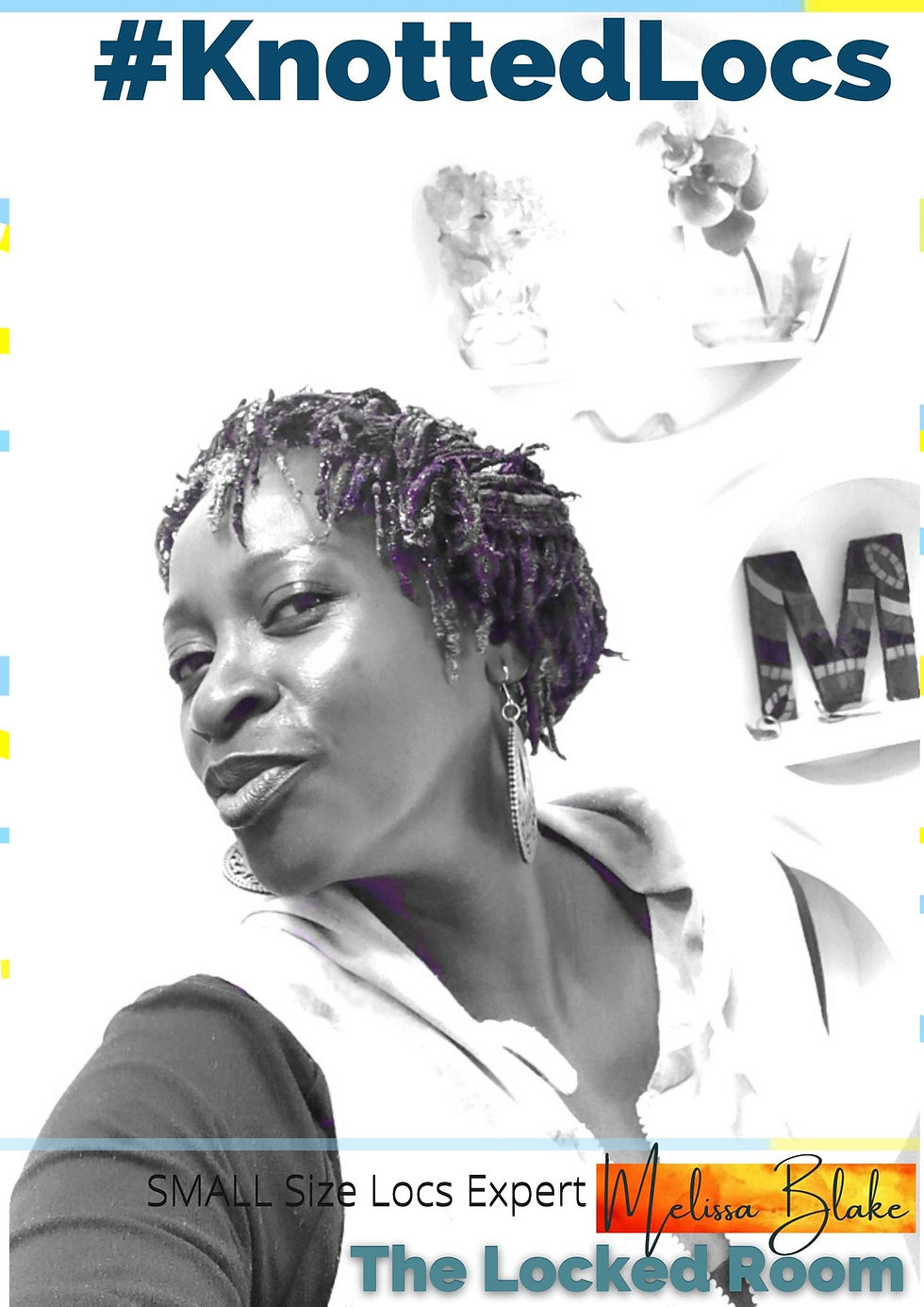
I'm Melissa Blake, creator of Knotted Locs and a London-based Small & Medium Size Locs Expert.

My name is Melissa Blake and I am the Creator of #KnottedLocs
My own experience with locked hair has shaped the way I work today.
12+ years wearing my natural hair loose
20+ years wearing locked hair
15+ years of hair-locking experience
7 years of 100% interlocking
4 years wearing Sisterlocks
8+ years developing and maintaining Knotted Locs
6+ years teaching my Knotted Locs approach

Want to know whether Knotted Locs could work for your hair?
You're welcome to contact me on WhatsApp.
Send me a short video of your hair, locs and regrowth, and we can begin the conversation about your individual needs.
Melissa Blake
Creator of Knotted Locs
London🇬🇧
You Are KNot Alone.
Online Consultations Available
Via WhatsApp
07494 036 113




Comments